Anna Berger · Behavioural Framework
Why do two intelligent people experience the same event and walk away with completely different realities?
The 7 Rooms of Human Perception is a practical behavioural framework for understanding how perception shifts under pressure — and how that shift drives every decision, communication, and response that follows.
The Framework
Under pressure, human perception doesn't stay neutral. It moves. It narrows, distorts, and filters — automatically, and almost always without our awareness. The 7 Rooms describes the seven most predictable ways this happens.
Each Room is not a personality type. It is a temporary perceptual state — a lens that activates under stress, shapes what we notice, and determines how we respond. The same person can move through multiple rooms in a single day.
UNDER PRESSURE
Stimulus → Automatic Perception (Room) → Behaviour
WITH AWARENESS
Stimulus → Pause (The Corridor) → Conscious Response
Watch: The 7 Rooms Explained
In this 25-minute talk, Anna walks through each of the seven rooms — what activates them, how they show up in everyday behaviour, and how awareness of them changes everything
The Seven Rooms
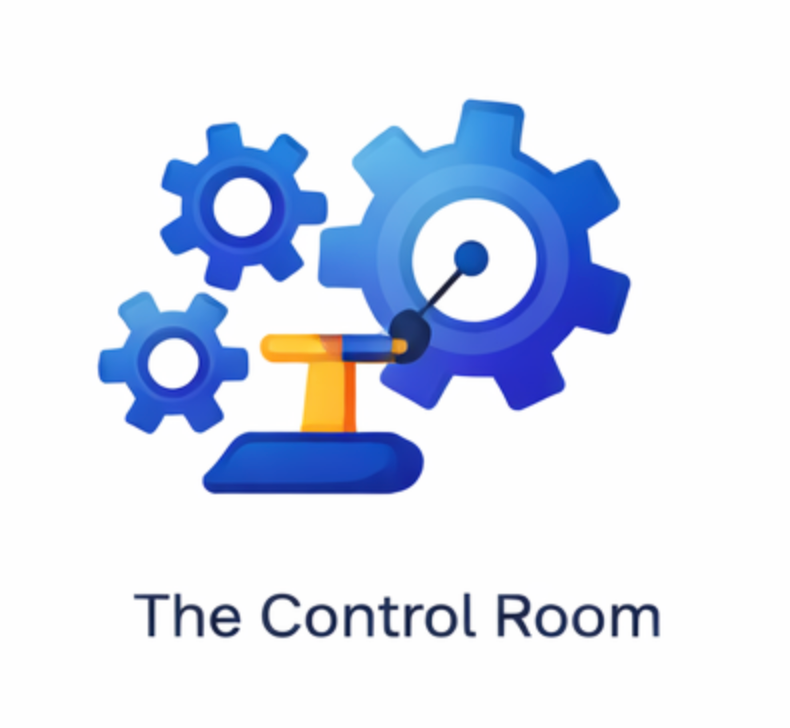
Control
Managing uncertainty through structure, rules, and oversight

Care
Maintaining relationships, often at personal cost

Proving
Demonstrating value and competence to self or others

Defence
Protecting identity from perceived threat or judgement

Distance
Maintaining detachment to preserve internal stability
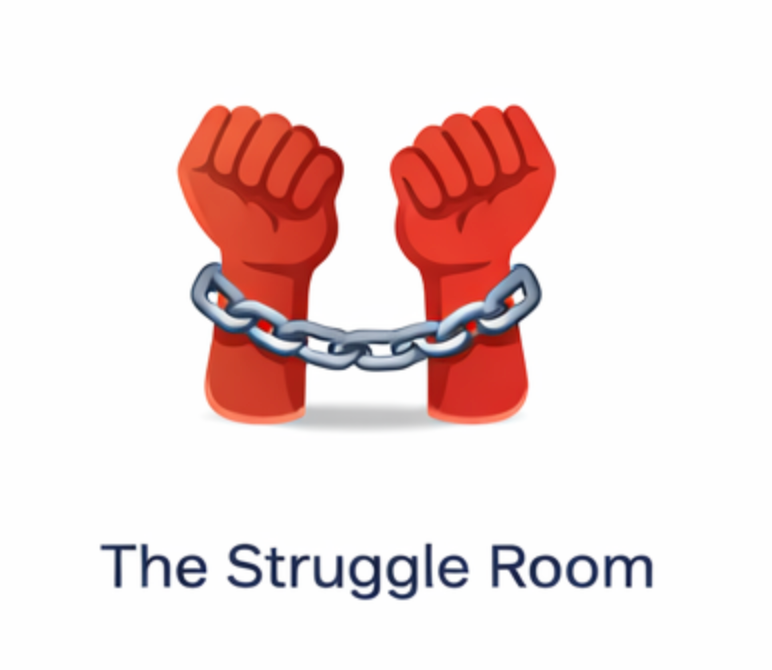
Struggle
Increasing effort as the primary response to difficulty

Escape
Reducing pressure by withdrawing from the situation
The 7 Rooms is presented as a practical tool for self-awareness and behavioural observation — not as a personality profile, clinical instrument, or psychometric assessment. It does not produce diagnostic results. It creates a language for recognising patterns that are already present.
Scientific Foundations
The framework draws on established principles from cognitive psychology, behavioural science, neuroscience, and stress-response theory. The 7 Rooms is a practical translation of these concepts — not a claim to have discovered them.
About Anna
Anna Berger is an international bestselling author, speaker, and creator of The 7 Rooms of Human Perception framework. For the past 17 years, she has explored how perception shapes behaviour, decision-making, communication, and human potential. Drawing on principles from cognitive psychology, neuroscience, stress response theory, and behavioural science, her work translates complex concepts about human perception into practical tools people can apply in everyday life.
Anna has worked with thousands of individuals from diverse backgrounds, helping them recognise the hidden patterns that influence how they interpret events, navigate relationships, respond to pressure, and make decisions.
Through her writing, speaking, and research, Anna helps people recognise that many of life's limitations are not found in external circumstances, but in the unconscious interpretations through which those circumstances are viewed.
Her mission is to help people see more clearly, think more flexibly, and create greater freedom in how they experience life.